


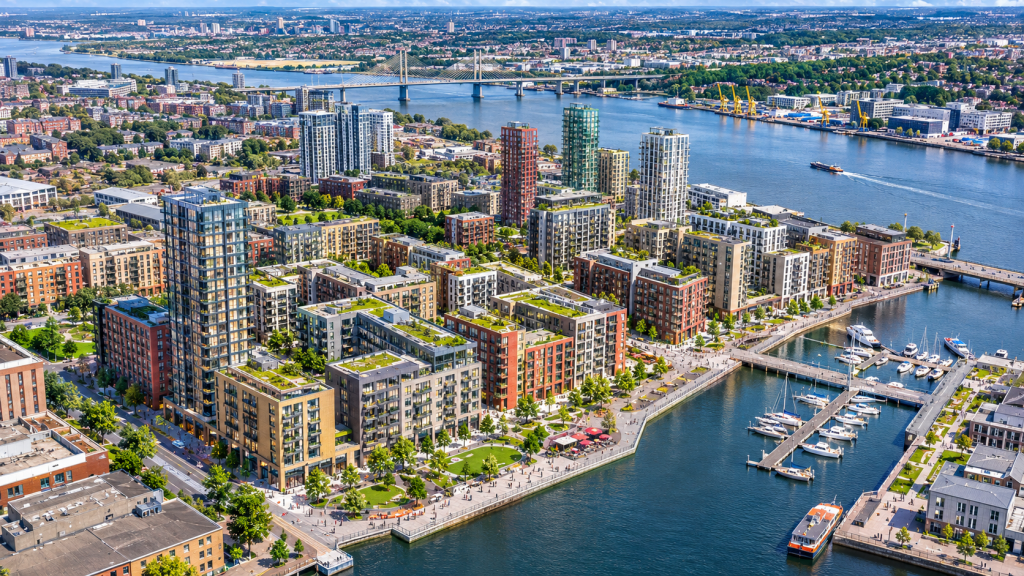
A 30-year development agreement has cleared the way for UAE-based property developer Arada to move forward with the long-delayed Thameside West regeneration project on a 47-acre waterfront site in east London.
The Greater London Authority (GLA) has awarded the agreement to Arada-backed Silvertown Homes without a competitive process, citing the company’s existing land ownership and development rights across the site.
The arrangement will bring together publicly and privately owned land, helping unlock one of London’s largest remaining regeneration opportunities.
Arada became involved in the project last year, taking a minority stake in the parent company of Silvertown Homes, Keystone Silvertown, to help revive the stalled development.
The Dubai-based developer is expected to secure majority control in 2027, potentially allowing Silvertown Homes to become the approved developer for almost the entire masterplan.
The regeneration scheme has faced years of delays, partly due to construction work on the Silvertown Tunnel and challenging market conditions.
Arada has already submitted plans to Newham Council for the first phase, comprising 1,500 homes across six buildings. Two of the proposed blocks will be dedicated entirely to social rent.
The wider masterplan proposes at least 5,000 homes, a seven-acre public park, commercial space and a kilometre of new Thames waterfront.
The development is also expected to benefit from a proposed Thames Wharf Docklands Light Railway (DLR) station. Arada is working with Transport for London to ensure the station is operational as the first residents move into the scheme.
Construction is targeted to begin in 2028, subject to planning approval. Arada’s UK construction business, Arada London, is expected to deliver the opening phase.
Gensler is leading the design work, supported by engineering consultant Arup and landscape architect Planit.
Under the agreement, the GLA will release publicly owned land in stages as construction progresses. In return, it will receive land payments and additional financial returns linked to the development’s value.
The £2.705bn award relates to the long-term development agreement rather than a single construction contract.
The agreement is expected to be formally signed on 17 December, with the wider regeneration programme potentially continuing into the 2040s.